From Natural Law to Daoism and Anglo-American Conservatism

A chain around a neck; the smoke of war in a distant land. Through the first two months of the Year of the Tiger, my heart was often chilled, yet my concern grew only more urgent.
What chilled me was not merely the way human lives were treated as no more than ants, but also the deluge of mockery and the brutal, benighted arguments wherever I looked. At such moments, almost from professional habit, I would remind myself: “Amid the confusion of appearances, return to first principles.” By the first principles of civilization, I mean matters of fundamental values. Yet a crude, abrasive summary of the world broke in upon this consoling injunction:
For those with vested interests, to touch their interests is to threaten their lives.
For many at the bottom of society, to change their convictions is to desecrate their ancestors’ graves.
The convictions of those below are precisely the source of the interests enjoyed by those above.
Anyone who tries to lay all this bare becomes the common enemy of both…
Perhaps this comes closer to the sorrowful reality of every age. For me, however, it raised a still more unsettling question: Do the values we uphold, believing them to embody truth—and even truth itself—have any objective existence at all? Could they be merely human prescriptions, imposed by power or cannon, and binding only upon the lower ranks of society?
This brought to mind Marx’s unsparing pronouncement: “Religion is the opium of the people.” But why stop at religion? The alluring, utopian “isms” of philosophy, the ubiquitous appeals to “public order and good morals” in social tradition—might they not all share that opiate quality of being designed by elites and put into practice by those below? Each of us carries an ideal portrait in the mind, an image of virtue joined to accomplishment: the brave and devoted knight, the rigorously self-disciplined aristocrat, the frugal leader, the wealthy man faithful to his marriage. These are not merely people who have succeeded in worldly terms; they are also exemplars of some social ideal. Yet how much truth lies behind the portrait? Nietzsche resented the restraints that conventional morality placed upon the “vital energies” of such “strong men.” Judged against the realities laid bare in the information age, his concern seems rather unnecessary. Values have always constrained only those who truly believe in them. The “supermen” in high places can, in fact, give free rein to their animal instincts, and do so beneath the most dignified of pretexts.
The human world as it exists is an absurd tableau in grey and black. Those offered up as sacrifices to a supposedly glorious age are often moved by their own conviction that they have “realized the value of their lives.” Each proud in their pride, each tragic in their tragedy, they pass from birth to grave consuming an endless supply of spiritual opiates. What a sorrowful condition.
Yet the matter seems less simple than this. Across that grey and black social tableau, streaks of red, orange, yellow and green have always appeared, vivid enough for clear eyes to discern. In the heavens, the stars wheel through their courses in ordered motion; on earth, living things arise and perish, each according to its laws. The natural sciences gradually took shape through the recording and ordering of those laws. People thus came to sense that some power beyond the world might govern all things in the universe, revealing itself through laws whose order possesses a beauty of its own: “All things have their laws; the authority of law rests with creation.” Might love and conflict in human affairs likewise have their laws? Might the darkness of the social tableau come from the dust that human hands have laid upon it?
Such a law of human affairs came to be called “natural law.”
Natural law means those enduring standards of value that exist within the human heart, independently of any particular cultural setting or social circumstance. One qualification is necessary: a person captive to biological instinct cannot give expression to the code of natural law inscribed within the mind. Such a person is concerned only with the allocation of wealth and sexual resources, unaware that conduct might need to answer to any constant standard. Thus it was not until the Axial Age, long after humanity had begun to emerge from barbarism and ignorance, that people gradually became aware of this powerful force hidden in the depths of reason. The discovery of natural law marked a profound turning point in civilization. From then on, certain groups within human society began consciously to distinguish among prevailing ideas, and to label as “human-made law” many of the accepted customs they had once taken for granted. The idea of natural law again became a shared conviction in the modern era. At the opening of The Spirit of the Laws, Montesquieu declares that “natural law” is the eternal law God has written deep within the human heart, whereas “human-made law” consists of the conventions of a particular age that sustain warfare and relations of worldly interest. It is the latter that depends upon the inclinations of political power.
Deep within human reason, two central forces hold sway: ideas and biological instinct. The former judges the world by an ideal; the latter looks only to immediate gains and losses. Those with vested interests usually benefit from society’s prevailing ideas, yet biological instinct may be the governing force in many of their minds—though they would never willingly admit it. In the past, aristocrats may have been taught first how to preserve their rank and wealth, and only afterward how to revere the many deities of society and clan. Today, when everyone appears to receive an education intended to cultivate the whole person, the power of ideas has been awakened in the public mind. As a result, many human-made prescriptions promoted by textbooks and celebrities, such as “green, low-carbon living” and “feminism,” are accepted without reflection as a consensus of “positive energy,” and increasingly become unquestionable social convictions and moral norms. This is, to my mind, an absurd state of affairs. To deny the importance of natural law from the standpoint of biological instinct, or to embrace ideas while mistaking human-made law for natural law: these are two dangers that have accompanied human civilization throughout its history.
What, then, are the specific principles of this natural law that embodies truth in human affairs? Are they the Confucian virtues of benevolence, righteousness, ritual propriety, wisdom and trustworthiness? The equality and fraternity of the French Revolution? The Westminster Confession of Faith? Or the Buddhist teachings of relinquishing attachment and non-self?
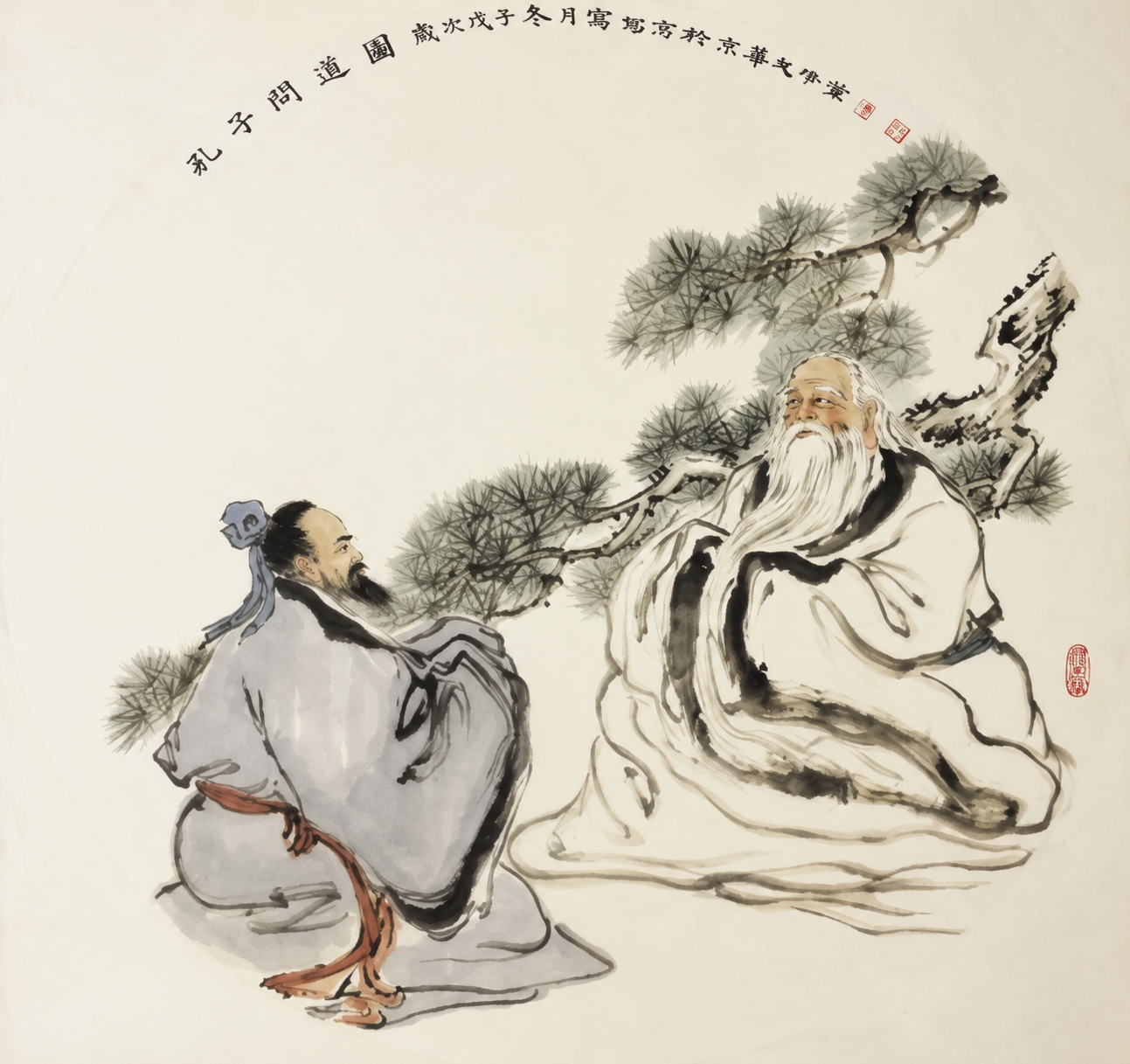
Before answering, I would like to recount the meeting of Confucius and Laozi recorded in the Records of the Grand Historian. On April 9, 518 BCE, before he began his travels among the states, Confucius visited Laozi, the keeper of the Zhou dynasty’s royal library, who was already in his seventies. Confucius asked him about ritual propriety. Li Er replied:
“Those of whom you speak have long since rotted away, flesh and bone; only their words remain.” The men who established the rites and music had, in other words, long been laid to rest. Why dig their doctrines out of the earth and enshrine them as an absolute standard?
Although Confucius did not understand, he was deeply shaken. He could only marvel that Laozi “rides the wind and clouds and ascends to heaven… He is like a dragon.” Years later, in his sole work of political philosophy, the Daodejing, Laozi offered a fuller account of truth, or the Dao:
“There is something formed in undivided wholeness, born before heaven and earth. Silent and vast, it stands alone and does not change.” Truth is, first of all, primordial, independent and eternal.
“This is called the form of the formless, the image of that which has no substance; this is called elusive and indistinct.” Truth has no definite shape—no form that can be called this or that “ism.” Like water, it simply “benefits all things and abides in stillness.”
“Hold to the Way of the present, and thereby govern what exists in the present.” The Dao, like water, flows through the river of history; its true significance lies in addressing the problems of what exists here and now. Seen this way, you might think that this philosopher, without equal in Chinese history, had said nothing at all. In fact, he had disclosed a thought of the greatest depth: truth, or the Dao, or natural law—independent and unchanging—is, at least in human affairs, negative in character.
What does “negative” mean? More vivid explanations can be found in the writings of Anglo-American conservatism. Hayek, for example, once said: “The greatest goods in politics are, in essence, negative: safeguards against harm, rather than tangible gifts.” Popper expressed a similar thought: “Work to eliminate concrete evils, rather than to realize an abstract good.”
The great Way, in other words, is formless. No school or doctrine can give its contours a definitive shape. Even the concerted ingenuity of the finest minds usually achieves little in the attempt, while excessive dogmatism brings disaster. Truth should be defined by what it is not, and sought or realized through the elimination of concrete, unjustifiable practices in the world of our own time.
We can therefore understand why Laozi so strongly opposed the rule of ritual morality, and still more the government of elites exemplified by Confucianism and the use of political power to direct moral instruction:
“Ritual propriety is the thinning of loyalty and trust, and the beginning of disorder.”
“When the great Way is abandoned, benevolence and righteousness appear; when cleverness emerges, great hypocrisy follows.”
…
The proper work of power should be confined to removing definite evils—such as lawbreaking and crime—rather than guiding people toward an empty conception of the good through cultural regulation, compulsory education, and the like. No one can settle once and for all what truth is; it should be left to free public discussion and unending competition. This will certainly give rise to positions and doctrines that are “hard to accept,” some of them even absurd. Yet what we need to guard against still more than these is the “fatal conceit” within ourselves. All too often, we are unable to judge what is new with either accuracy or foresight. We should recognize that the very design of human beings by the powers of creation will, in the end, allow the community as a whole to achieve, through the free competition of diverse ideas, “transformation of itself without forced action, and right order of itself through stillness.”
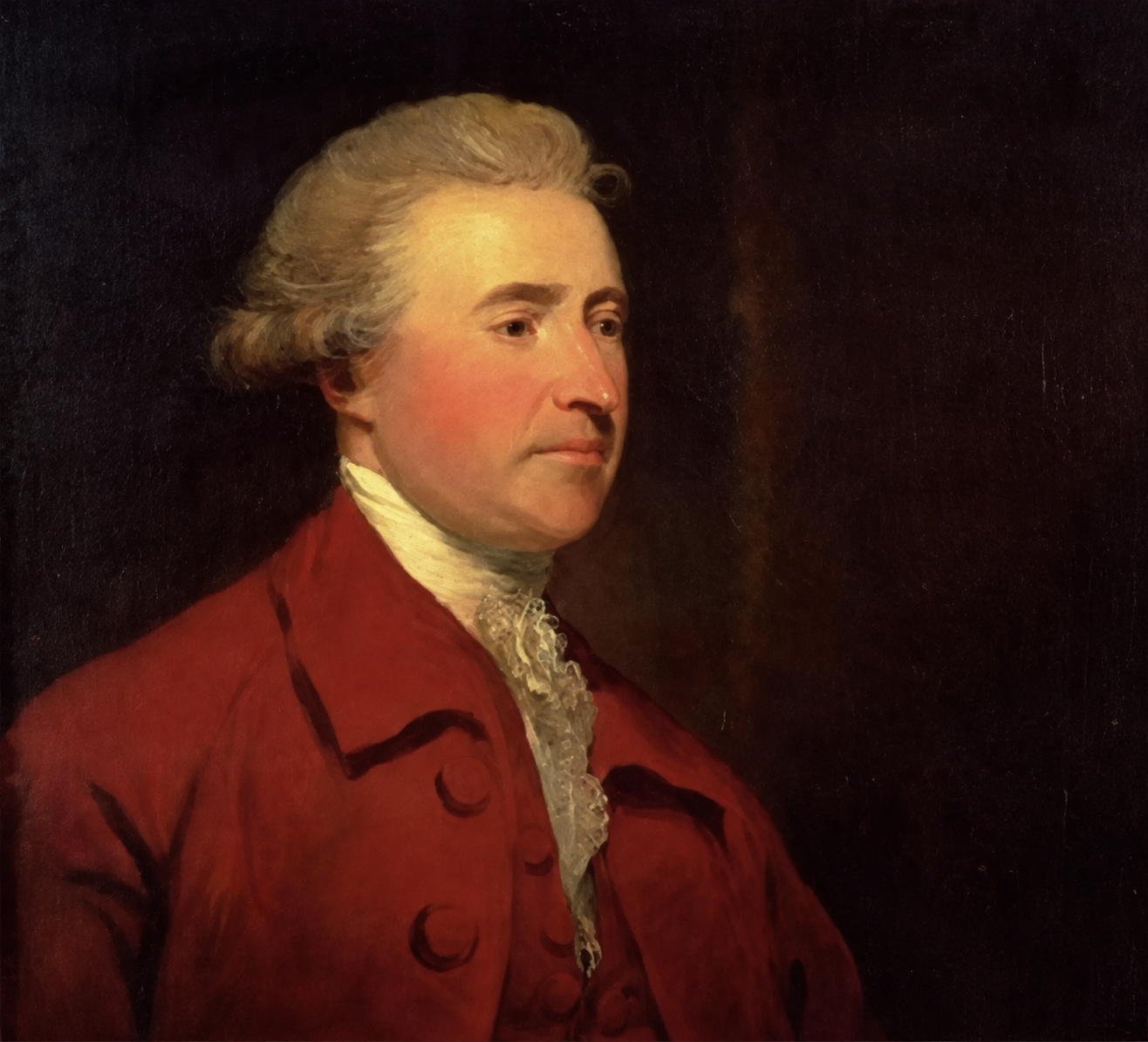
In modern times, it seems that Anglo-American conservatism alone has “inherited” the central spirit of Daoist political philosophy. Yet unlike Daoism, so often misunderstood or left upon the shelf, conservatism has entered deeply into social practice and made an irreplaceable contribution to modern civilization. In conserving liberty, it is, in essence, addressing power in the ringing voice of Li Er:
“I leave things alone, and the people grow prosperous of themselves; I do not force action, and the people transform themselves; I cherish stillness, and the people set themselves right; I am free of desire, and the people return of themselves to simplicity…”
The great Way is formless; truth is negative. This may be the highest wisdom available to us, and the wisdom most capable of bringing well-being to the human world.