I recently heard an intriguing story.
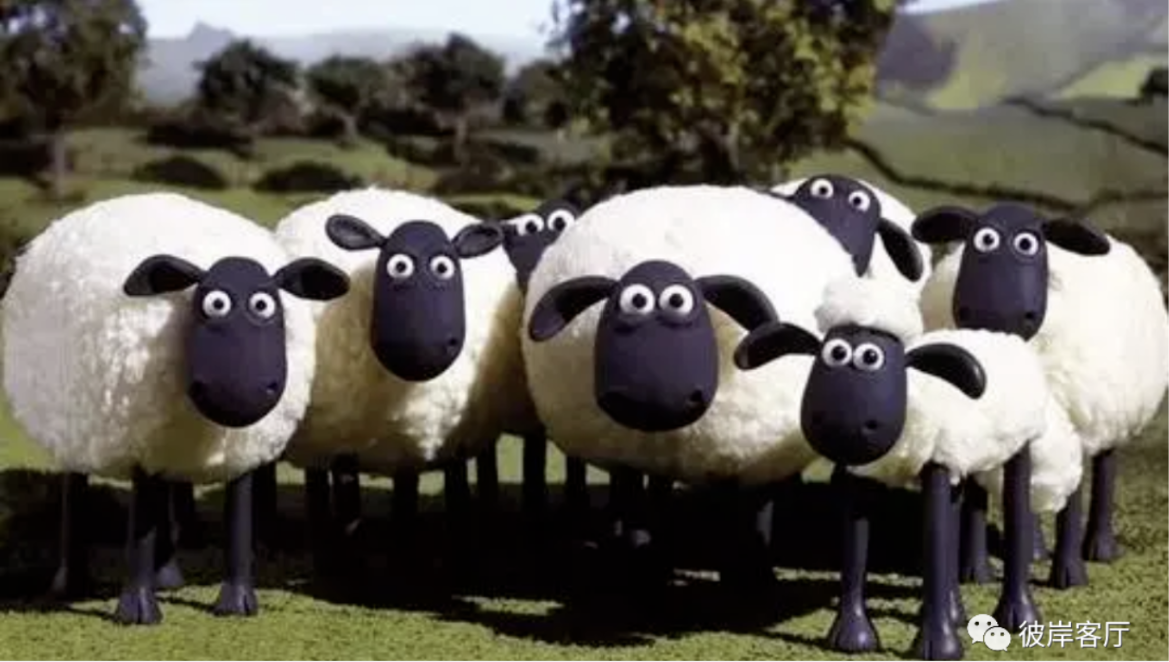
On the eastern and western sides of a lush pasture lived two flocks: Pleasant Goat’s flock and Shaun’s flock. Their lives were carefree until a wolf broke into the pasture. It slaughtered the helpless sheep, staining this once joyful Eden with the blood of its victims. In their misery, the sheep prayed to God for deliverance. God heard their prayers and offered them a choice: the wolf could be replaced by two still fiercer tigers. Only one tiger, however, would be allowed into the pasture at a time, and the sheep could choose to exchange it for the other whenever they wished.
The eastern flock fell into despair. ‘Two even fiercer tigers taking turns to fill their bellies here?’ they protested angrily. ‘Wouldn’t that make our lives harder still?’ They chose to remain with the wolf. Shaun’s flock in the west, though also deeply disappointed, accepted the new option God had offered. God accordingly separated the two flocks and placed a tiger in Shaun’s pasture.
As expected, the tiger was far more savage than the wolf. It killed even more sheep, until their remains lay scattered across the western pasture. Terrified, Shaun’s flock could only ask God to bring in the other tiger. But that tiger, famished after waiting outside for days, hurled itself at the sheep with even greater ferocity. Panic swept through the flock. They kept changing tigers, yet every new arrival was ravenous. The sheep fled in all directions, unable to pass a single day in peace.
Before long, however, a turning point came. After one exchange, the incoming tiger did not attack. Hungry and exhausted, it dragged itself before the sheep and asked to negotiate. ‘You left me outside for so long this time that I nearly starved to death,’ it said. ‘Now that you have let me in, I want to make an agreement. I will no longer kill any sheep I see. I will eat only those who have died naturally or are about to die of illness. Please never send me out again. Hunger is too dreadful to bear.’ The sheep were overjoyed and ready to agree. A few, however, strongly objected: if this tiger stayed in the pasture until the other starved to death outside, what assurance would they have that it would still honour its promise? The flock therefore signed a short-term agreement and began to change tigers according to a plan. Gradually, both tigers realised that the sheep held the power to determine whether they would starve. They grew increasingly docile, feeding sparingly on sheep that had died in the pasture in order to win the flock’s favour. At last, Shaun’s sheep found some stability. Even so, they remained vigilant towards the beasts’ savage nature and continued to take the initiative in changing the tiger within their pasture.
Life for Pleasant Goat’s flock in the east, meanwhile, grew more wretched. With the balance of power so overwhelmingly in its favour, the wolf became ever greedier, killing sheep only to eat a small portion of the choicest meat. Sheep died in great numbers, while the wolf grew fiercer and fatter. Slaughter and fear spread across the eastern pasture, and as the years turned in their ceaseless circle, Pleasant Goat’s flock never knew a peaceful day…
The political philosophy of this story is unmistakable. Yet it also leads towards a more fundamental question: the essential meaning of freedom. Isaiah Berlin distinguished between ‘negative’ and ‘positive’ understandings of liberty across civilisations, arguing that negative liberty truly embodied freedom’s inner meaning—and could afford a civilisation greater freedom. This offers a straightforward reading of the fable. Yet such a definition still bears the British tradition’s marked resistance to abstract speculation. It consequently leaves unanswered the relationship between freedom and causal predestination, and is plainly insufficient for understanding freedom at its source. The story of the two flocks suggests another, more illuminating possibility: individual freedom should not mean a return to Eden, a release from every constraint; it should mean that the mind has as many ‘constraints to choose from’ as possible.
By ‘constraint’, I mean a natural restriction imposed by causal determination. Throw a shot on the Moon, for instance: under the laws of nature, its initial velocity determines its trajectory, as though it were locked into a fixed destiny in space and time. For a human being, such constraints take the form of desires, instinctive needs, and settled ideas. Assigned a task by a superior, we become anxious to outperform our colleagues; seeing a beautiful woman pass, we are filled with the ambition and unease of trying to win her heart; seeing workers living in poverty, we brim with hatred for the capitalist who owns their factory. At every moment, we inhabit these ‘trajectories of desire and ideas’; only the limits of our abilities and the restraints of law prevent them from being fully projected into action. Some therefore declare: ‘Freedom is not doing whatever you please; it is doing whatever you wish, provided you do not affect others.’ This is a shallow understanding. Following your every impulse usually signifies not the gaining of freedom but its loss, for both body and mind have entered the predetermined trajectories of desire and ideas, from which it becomes increasingly difficult to break away. Consider this: ‘When you are free to drive as fast as you like, you lose the freedom to stop whenever you choose.’ Both accelerator and brake are constraints upon the mind. Contrary to our habitual assumption, one does not stand for freedom and the other for restraint.
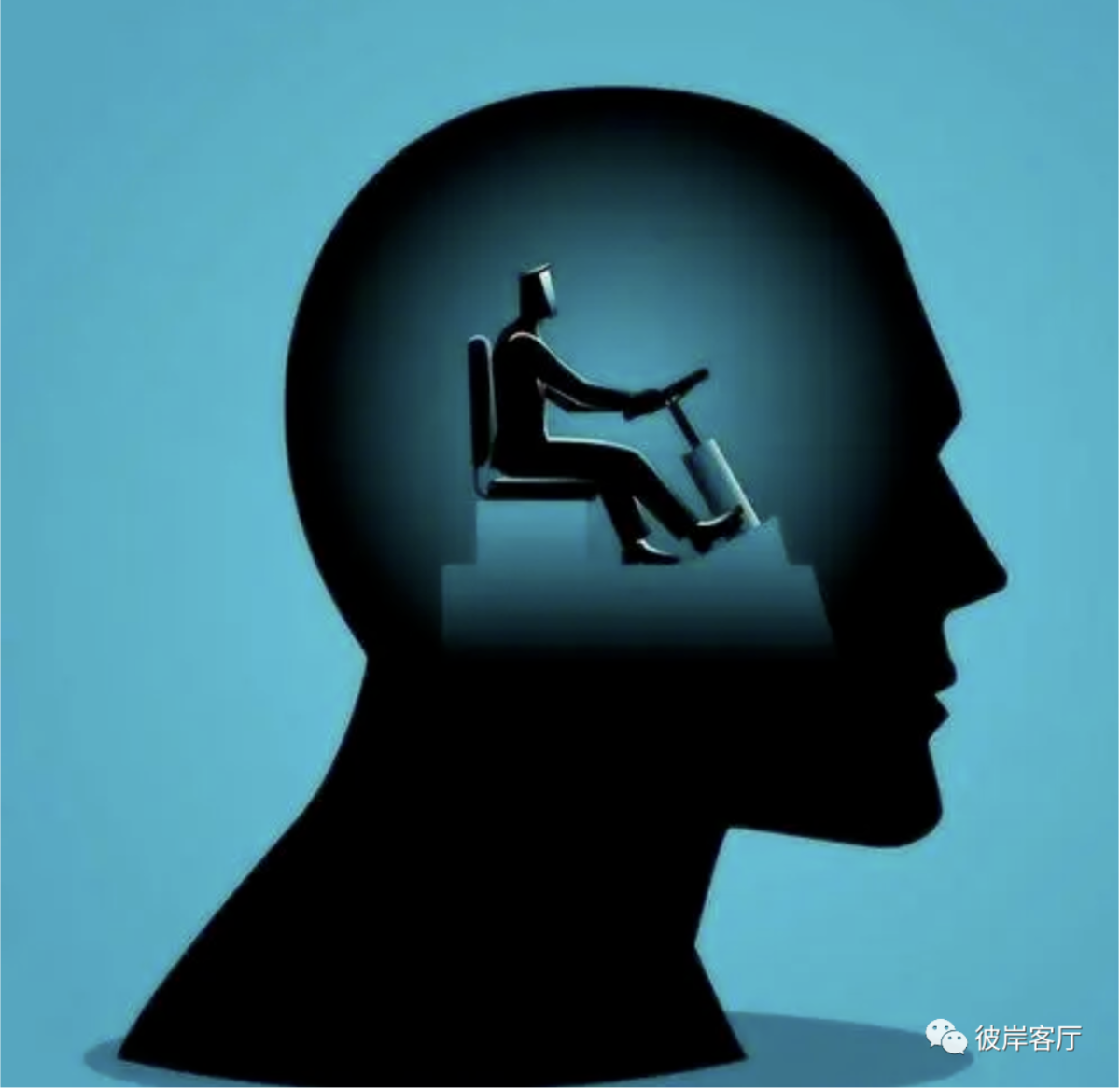
Where, then, does freedom dwell? The contrast between the two flocks gives us a glimpse of its outline. With only one beast available in the pasture, its greed knows no bounds and the sheep face endless slaughter. This mirrors what happens when a single desire or idea consumes the mind: freedom is lost, and we travel ever farther along the track laid down by instinct or by the internal logic of that idea. Only when we can choose among more of these beasts—these constraints of desire and thought—do we have a chance of truly mastering them. Freedom of mind means that the soul can step outside the desires of body and mind, or outside established ideas, and open itself to different feelings and thoughts. Every idea may be a shackle inscribed with prejudice, directing the course of our thinking; yet the ability to leap between their different trajectories is the only freedom to command the will that human beings can attain.
From another angle, this may accord with Locke’s statement that ‘Freedom is the rational exercise of one’s own “power”.’ The formulation carries considerable historical weight. During the Enlightenment, as classical mechanics spread through Europe, people increasingly understood that the universality of physical laws implied the predetermination of nature’s unfolding. But if so, where was the work of almighty Jehovah to be found? The idea of a ‘first mover’ accordingly gained currency: everything has an antecedent cause, and at the end of that chain stands God. Advocates of free will, especially the great empiricists of the Enlightenment, extended this conception: at the ultimate source of causation might stand not only God, but also human free will. In other words, a person’s leap between alternative choices of the will may have no cause at all. Such a leap is itself an expression of freedom and a source of order.
Although this account of free will already contains much of the colouring of predestination, it remains unpersuasive in the face of the extraordinary success of modern natural science, the rationalism rooted deep within the modern mind, or even Christianity’s predestined vision of history culminating in the Last Judgment. What is needed is a theory of ‘predestined freedom’—or else the philosophical idea of free will must simply be abandoned.
To my mind, believing the will to be either wholly free or wholly unfree leads to profound unhappiness. Yet the ‘Way’ between these extremes seems elusive and difficult to express. Fortunately, probability theory, already widely used in the natural sciences, offers a clearer way of understanding ‘predestined freedom’. The world remains causally predetermined, but at certain special nodes—the ultimate sources of causation, such as the tendencies of human thought—this predetermination is probabilistic. Nature’s design gives our minds, in many matters, a probability approaching ninety per cent of entering a particular trajectory of desire or ideas. Yet some free souls preserve the remaining possibility of other trajectories and may break away from the customary pattern. Humanity as a whole therefore repeatedly makes the same choices, as though the will were governed by laws. For certain individuals, however, their choices are fundamentally without a cause—and there alone resides the freedom of the human will.
The degree of our freedom of mind can thus be measured by the breadth of our choices, while the realisation of individual freedom lies above all in the courage to leap onto a ‘low-probability trajectory’. From the perspective of a greater design, there is nothing new under the sun: nothing, indeed, escapes history’s predetermination. Yet within a particular cross-section of history, in some particular corner of it, each independent person or community may still follow Shaun’s flock: take the initiative, become the ‘first mover’ in ‘choosing the tiger’, and thereby attain freedom and become the master of one’s own fate.